
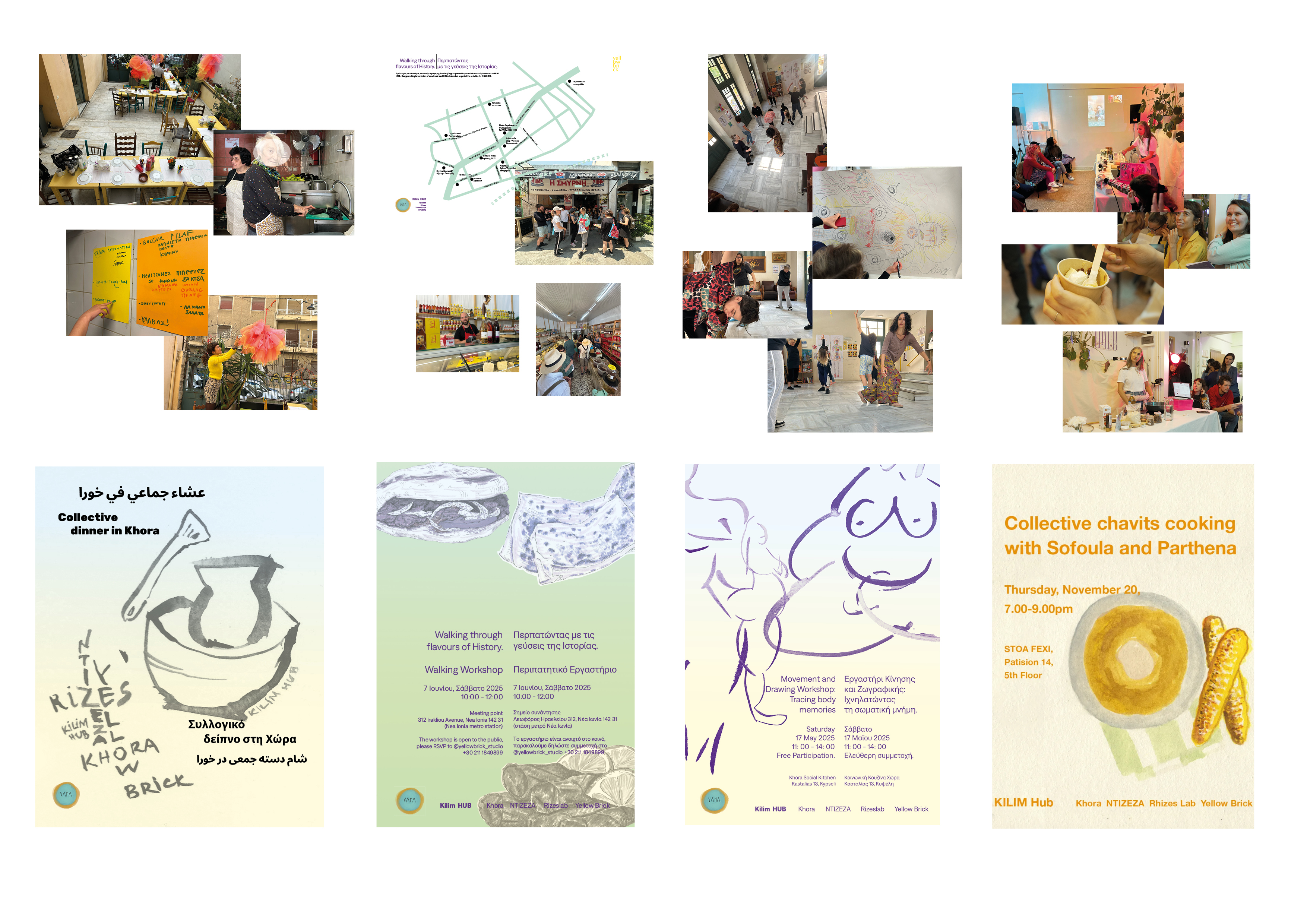
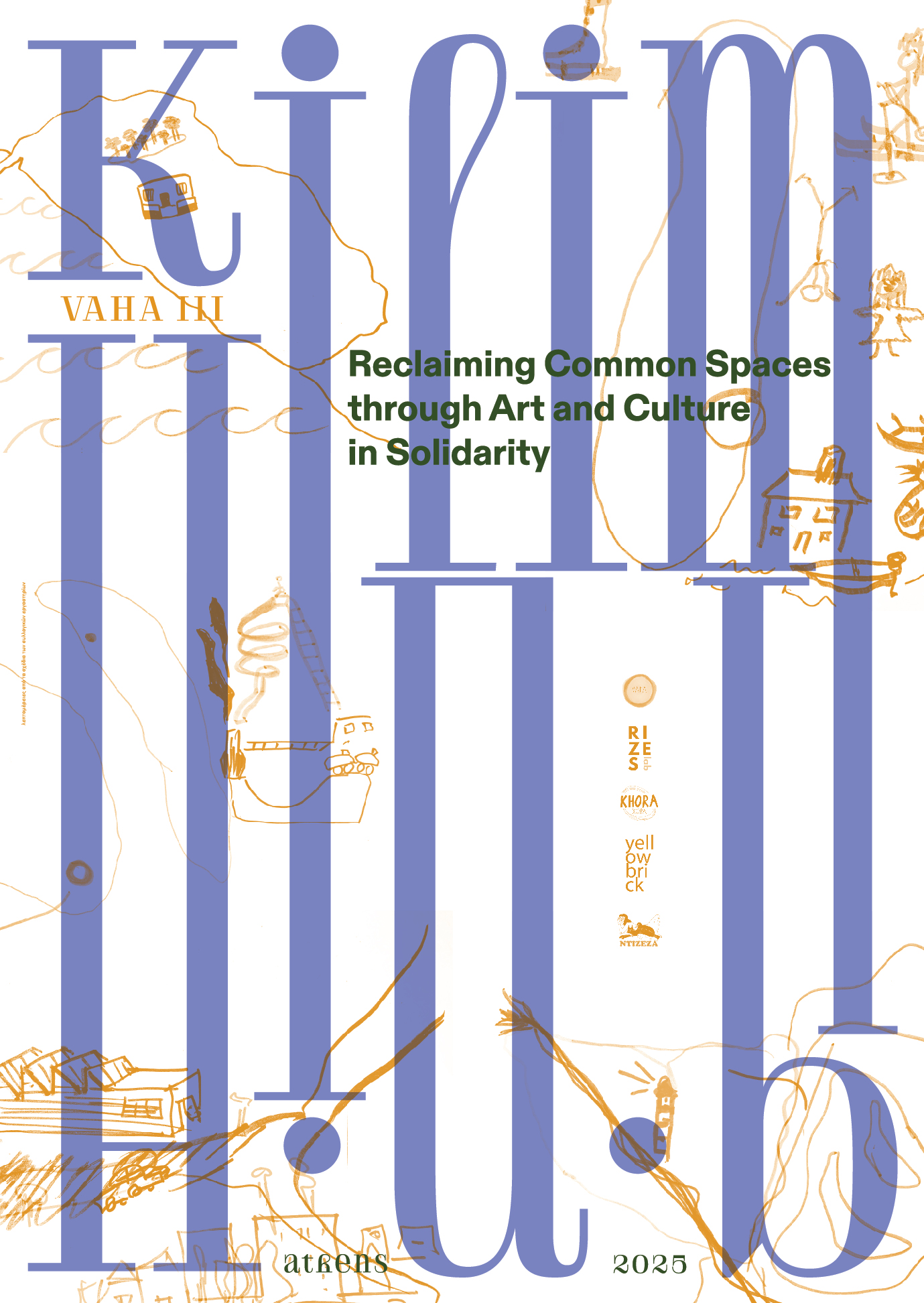
KILIM* Athens (κιλίμι) refers to a flat-woven textile traditionally made across regions of Anatolia, the Balkans, and the wider Eastern Mediterranean, reflecting at least five centuries of complex cultural and personal influences from nomadic women (Sumru Belger Krody, “The Power of Color: Anatolian Kilims”, 2016). Here, Kilim signifies a collaborative project between Khora, Yellow Brick, Rizes Lab and NTIZEZA, within the context of VAHA III: Reclaiming Common Spaces through Art and Culture in Solidarity.
Kilim proposed a hybrid narrative based on postmemory and oral history, focusing on herstory; a feminist approach to history that highlights the roles and perspectives of women and emphasises their daily experiences, emotions and gendered dimensions. We chose to examine the city’s migration and movement history through the humble lens of oral narratives and the urban space. In a city constantly re-imagined over its own ruins of belonging, Kilim emerged as a minor archaeology of the present. Our gatherings, stories and shared meals became slight gestures of reclaiming what survives beneath the myth, the cradle of democracy, narratives that need living neighbourhoods to be “cleaned” or commodified. We did not seek to restore the past, but to inhabit it differently, acknowledging how stories of displacement, solidarity and everyday survival continue to shape the city’s fragile commons.
Learn more about VAHA HUBS and KILIM team
*VAHA III: Reclaiming Common Spaces through Art and Culture in Solidarity
VAHA is an initiative of Anadolu Kültür and zusa, funded by Stiftung Mercator and the European Cultural Foundation.